Emotional wellbeing is connected to both needs and behaviours. A challenging or negative behaviour may exist if a need is not being met. When the need is met, the behavioural pattern is altered.
This way of looking at behaviours will therefore involve building strong relationships with children and their support network. In some cases the support network might be close or immediate family, whereas in other cases the support network might involve community members or extended family members.
The behaviours demonstrated in children will vary depending on the age and developmental achievements made. The demonstration of biting behaviours may occur consistently if a young child is still developing language skills which will allow them to verbalise their needs and wants. A child who is displaying more aggressive behaviours may be woken during the night and therefore be tired throughout the day.
Let's consider needs...
Our basic needs would be items like food, shelter, clothing, sleep, clean air and water.
Maslow’s hierarchy of needs describes these needs as Physiological Needs. Maslow’s theory considers that needs must be met in a specific order for a person to be able to grow and fulfil more complex needs.
When observing and gathering information around a challenging behaviour, looking at and ensuring that basic needs are being met is a great place to start. This may involve routines and rituals for the child both while in care but also at home. Asking families whether their child slept throughout the night, or whether they ate breakfast, will allow you to alter times and activities to fulfil a basic need. Once these needs are met, if the challenging behaviours continue to present, you may need to observe and notice on a deeper level.
Safety Needs are the next identified need in Maslow’s Hierarchy of Needs. This theory presents the information that when basic needs are met, feeling safe and secure is the next important step in personal growth.
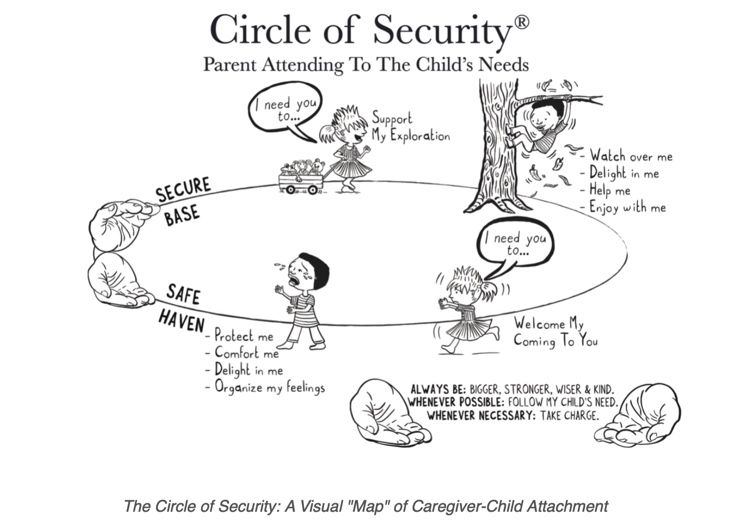
The Circle of Security Program, based on Bowlby’s Attachment Theory, supports Maslow’s theory presenting information based on a child’s ability to learn and grow once they have built an attachment to their primary carer, which is done by having their basic needs met.
The Circle of Security presents the idea of offering a safe base for children to go off and explore, knowing and feeling secure that they have a safe haven to return to if they are feeling unsure or once they have made a new discovery.
How does this link to emotional wellbeing and behaviours?
When a baby, toddler or child have their needs met, they seek out and build relationships (attachments) with others. Once they feel secure in these relationships, and are confident that these needs are going to be met on an ongoing basis, babies, toddlers and children feel safe and secure. When feeling safe and secure babies, toddlers and children begin to investigate the world around them. They make discoveries, take risks and demonstrate positive behaviours. This builds positive self-esteem and allows babies, toddlers and children to find happiness, satisfaction and joy in everyday experiences.
In this perfect world scenario, fulfilling basic needs will lead to positive outcomes for all.
However we don’t live in a perfect world scenario. There is always going to be interference with this natural balance.
Stop, Think, Wonder...
Are my relationships with children and their families allowing me to find out what is happening in real-time? For example, how well are each of my children sleeping each night, are there signs that would tell me whether a child slept well the night before?
When I am observing children, what information am I gathering about their needs as well as their interests and behaviours?
What does a safe haven for babies, toddlers and children look and feel like?
Changing behavioural patterns involves being present, mindful and aware.